


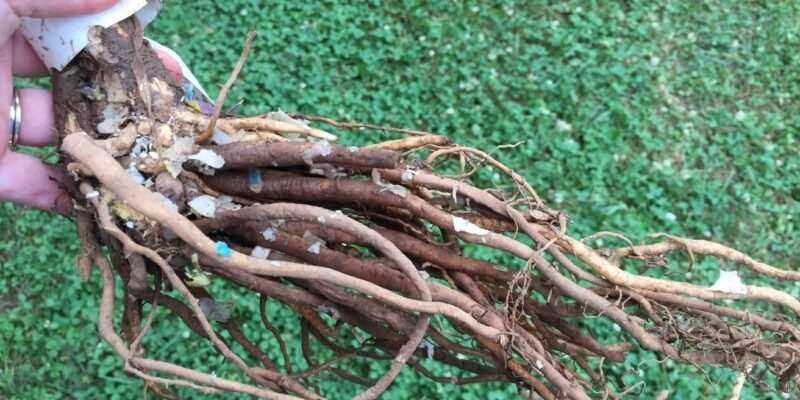
Winter in the British garden is often dismissed as a time of dormancy and quiet, but for the serious fruit grower, it is arguably the most critical season of the year. While the branches above ground stand stark and leafless against the grey sky, the soil beneath holds the potential for the next half-century of harvests. This is the season of bare-root planting, a method that might seem antiquated to the uninitiated who are used to browsing rows of plastic pots in a garden centre, but which remains the gold standard for establishing robust, long-lived orchards. Understanding the mechanics of this process is what separates a tree that merely survives from one that thrives.
The concept is straightforward enough in theory. Nurseries lift trees from their open fields when they are dormant, shake off the soil, and ship them directly to gardeners. There is no heavy pot, no peat-based compost mix, and arguably less transplant shock if handled correctly. However, the apparent simplicity belies a strict biological deadline and a requirement for specific techniques that differ significantly from planting container-grown stock. Success relies on working with the tree’s natural rhythms rather than trying to force growth. When you see fruit trees for sale during the colder months, they are almost invariably these field-grown specimens, waiting for a brief window of opportunity to be returned to the earth.
According to the specialists at ChrisBowers, successful establishment relies on planting young, vigorous stock before the soil warms up. They note that while high-quality fruit trees for sale are resilient, they require immediate contact with moist soil to begin the invisible work of root healing long before the first bud breaks. They advise that getting the tree in the ground during the quietest months of the year is the single best investment you can make for its future longevity.
The Critical Importance of the Dormant Window
The first and most significant realization for any gardener is that bare-root planting is a race against the sun. These trees are not dead; they are in a state of suspended animation. During late autumn and winter, the flow of sap slows to a halt, and the tree conserves its energy in the root system. This dormancy is the only reason the tree can survive being dug up, stripped of soil, and transported across the country. It allows the plant to withstand the trauma of root disturbance that would kill it instantly in July.
However, this window is finite. In the UK, the season typically runs from November to March, but the changing climate is making these boundaries fluid. A particularly mild February can trigger early bud break, at which point the bare-root season abruptly ends. Planting while the tree is strictly dormant allows the roots to settle into their new environment without the immediate pressure of supporting leaves and flowers. If you plant a tree that has already started to wake up, the demand for water from the expanding leaves will outstrip the ability of the damaged root system to supply it, leading to a failure known as transplant shock.
This biological reality dictates that you must be prepared to act swiftly. The advice from industry professionals is consistent: do not delay. The experts at Chris Bowers, a renowned nursery in the UK, emphasize that while we often worry about the cold, it is actually heat and dryness we should fear most during this stage. They suggest that the best strategy is to secure your stock early in the winter.
The Art of Heeling In and Dealing with unpredictable Weather
A common anxiety for British gardeners is the unpredictability of the weather. You might order your trees in November intending to plant them immediately, only to find the ground frozen solid or waterlogged by torrential rain when they arrive. This is where the technique of “heeling in” becomes an essential skill. Heeling in is essentially a temporary planting measure that buys you time—weeks or even months—until the conditions are perfect for the permanent site.
To heel in a tree, you dig a shallow trench, usually with one sloping side. You place the tree roots in the trench so that the trunk rests at an angle on the sloping side. You then cover the roots loosely with soil or sand and firm it down gently. The angle of the trunk is crucial because it prevents the wind from catching the tree and rocking it, which could damage the roots even in this temporary state. The goal is not to encourage deep rooting here, but simply to keep the roots moist, dark, and frost-free.
This method is far superior to leaving the trees in their shipping packaging in a shed or garage. Even in an unheated outbuilding, the roots can dry out surprisingly quickly, or a sudden warm spell can trigger premature budding. By heeling the tree into the soil, you maintain the correct temperature and moisture balance naturally. It acts as a buffer against the vagaries of the British winter. If your garden soil is completely unworkable due to deep frost, you can even heel trees into a pile of compost or sand in a sheltered corner. The key takeaway is flexibility; the tree is safer in the ground, even temporarily, than anywhere else.
Soil Preparation and the Myth of the Rich Hole
Once the weather clears and you are ready to plant permanently, the preparation of the soil is the next hurdle. There is a prevailing myth that you should fill the planting hole with the richest compost, fertilizer, and manure available to give the tree a “good start.” In reality, this can be counterproductive. If you create a small pocket of incredibly rich, soft soil surrounded by heavy native clay, the tree’s roots have no incentive to leave that comfortable pocket. They will circle inside the hole, eventually becoming pot-bound in the ground. Furthermore, a hole filled with loose compost can act as a sump, collecting water from the surrounding soil and drowning the roots.
The correct approach is to improve the structure of the existing soil rather than replacing it. This often involves “double digging,” a labour-intensive but highly effective method where you break up the subsoil (the layer below the topsoil) without bringing it to the surface. This fracturing of the lower earth allows for better drainage and easier root penetration. You can mix in some well-rotted organic matter, but it should be well-incorporated with the native soil, not left as a pure layer.
The shape of the hole matters too. Research suggests that a square hole is actually better than a round one. In a smooth, round hole, roots can start to spiral. In a square hole, when a root hits the flat side or a corner, it is more likely to branch out and penetrate the surrounding soil, establishing a wider and more stable anchor. This structural preparation is far more valuable than chemical fertilizers at this stage. You want the tree to have to work slightly to explore the soil, as this builds the extensive root network necessary to withstand summer droughts. When looking for fruit trees for sale, remember that the tree you buy is only 50% of the equation; the soil preparation you do is the other 50%.
Root Hygiene and Avoiding the J-Root
The physical handling of the bare roots is a delicate operation that requires a surgeon’s eye. When a tree is dug up from the nursery field, it inevitably loses a portion of its root system. What remains is often ragged or torn. Before planting, it is essential to inspect these roots. Any roots that are snapped, shredded, or showing signs of rot should be trimmed back to healthy tissue with sharp secateurs. A clean cut heals much faster than a tear and is less likely to succumb to fungal infection.
Equally important is rehydration. These roots have been out of the ground, exposed to air, for days. A pragmatic step is to soak the roots in a bucket of water for an hour or two before planting. This ensures the tree tissues are fully turgid and hydrated when they enter the soil. However, do not leave them soaking for days, as roots also need oxygen and can drown.
The most specific technical error to avoid is the “J-root.” This occurs when a root is too long for the planting hole and ends up bent upwards, resembling the letter J. A root that points upwards is fighting gravity and the tree’s natural hormonal signals. It will almost certainly fail to develop properly, and in severe cases, it can stunt the entire tree’s growth or lead to instability. It is far better to dig a wider hole to accommodate long roots than to bend them to fit. If a hole cannot be made larger due to bedrock or other obstructions, it is actually preferable to trim the root slightly than to plant it in a J-shape. The goal is a radial spread of roots, extending outwards and downwards, anchoring the tree like the spokes of a wheel.
The Advantage of Youth Over Size
Finally, there is a psychological hurdle that many gardeners must overcome: the desire for “instant impact.” When browsing for fruit trees for sale, it is tempting to buy the largest, oldest tree available—a 4 or 5-year-old specimen that looks like a real tree already. However, bare-root specialists consistently argue that younger trees, often called “maidens” (1-year-old trees) or 2-year-old bushes, establish much faster and often overtake larger trees within a few years.
A large tree has a large root system, and when it is dug up, it loses a significant percentage of that mass. The ratio of root-to-shoot becomes unbalanced. The remaining roots struggle to support the large canopy, leading to a period of stalling where the tree puts on no new growth for a year or two as it frantically tries to rebuild its foundations. A younger tree, by contrast, has a smaller root system but loses less of it proportionally. It suffers less transplant shock and recovers almost immediately.
Furthermore, a younger tree is a blank canvas. It allows you, the gardener, to decide the shape of the tree. Do you want a central leader, an open centre bush, an espalier, or a cordon? With a maiden whip, you can make those pruning cuts yourself and direct the tree’s architecture from the very beginning. A clearer understanding of this trade-off—patience now for vigor later—is the mark of an experienced grower. You are not buying a finished product; you are buying potential.
Conclusion
Planting a bare-root fruit tree is an act of faith and foresight. It requires ignoring the bleakness of the British winter and trusting in the invisible biological processes occurring beneath the frost line. By understanding the physiology of dormancy, mastering the pragmatic skill of heeling in, preparing the soil structure rather than just its nutrient content, respecting root hygiene, and choosing vigorous youth over deceptive size, you set the stage for success. These trees will likely outlive the gardener who plants them, offering shade, blossom, and fruit for decades. The effort taken on a cold January morning to get these details right is paid back with interest every autumn for the rest of the tree’s life. It is a slow, quiet craft, but one that yields the sweetest returns.
Do Read: Why Ignoring Early Pest Signs Leads To Costly Structural Repairs